Finquet Connect
The hardware and software solution that allows farmers to integrate sensors and irrigation controllers with Finquet simply and without connectivity issues.
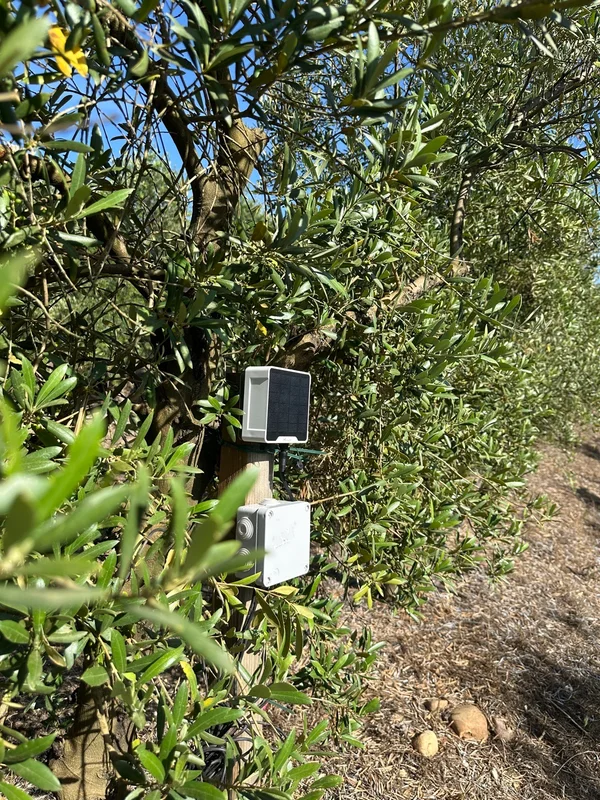
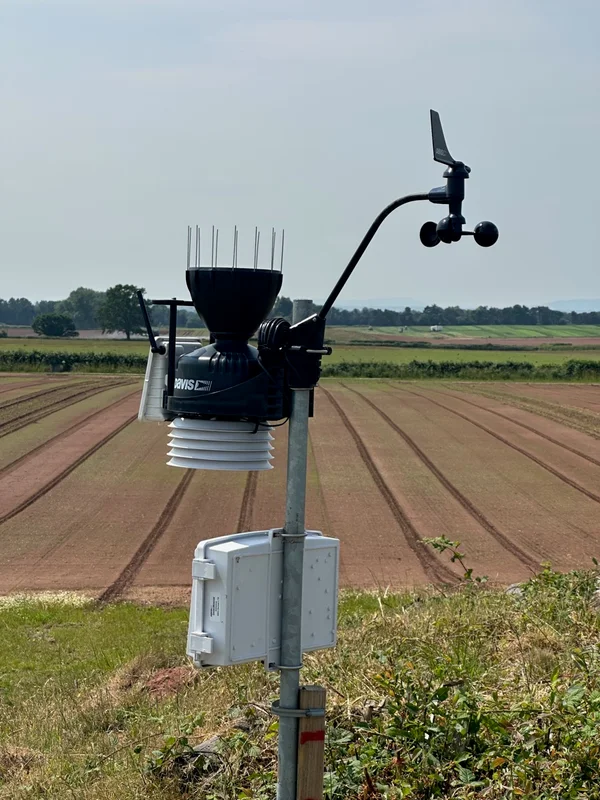
Connectivity for all types of farms
Our devices support LoRaWAN, Narrowband IoT and GSM, ensuring coverage at any location. No matter how remote your farm is, there will always be a connectivity solution adapted to your needs.
 LoRaWAN Up to 15 km range with minimum battery consumption. Ideal for large and remote farms.
  Narrowband IoT Low-power cellular technology optimized for IoT. Penetrates indoors and basements.
  LTE Standard mobile coverage for areas with good cellular signal. Compatible with any operator.
 Total autonomy
Install. Forget it.
Integrated solar panel and batteries. No cables, no external power. Data every 15 minutes, continuously and maintenance-free.
Sensors
What do you want to measure?
Pick one and we'll tell you what we offer and which sensors you can connect.
We offer you
Soil kit
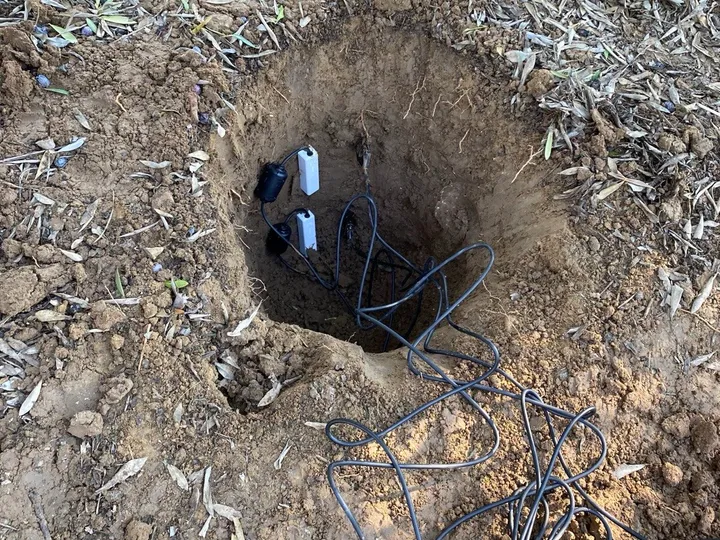
- A solar-powered datalogger with up to 3 moisture sensors
- Probes at different depths (for example 20, 40 and 60 cm)
- Data every 15 minutes on your Finquet map, with irrigation alerts
- Installed and registered: you just open the app
Sensors we connect
Already have one? We integrate it. Don't? We supply it.
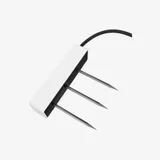
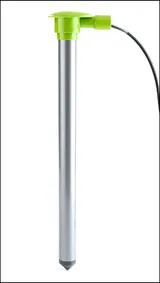
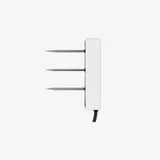
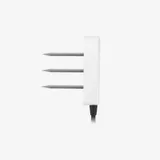
- METER TEROS 12 Three-prong sensor pushed into the soil that measures volumetric water content (% water), temperature and electrical conductivity (salinity) at that point. Several at different depths show how water moves down after each irrigation and whether salt builds up in the root zone.
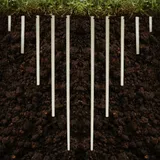
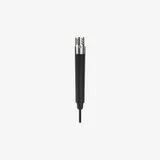
- Sentek Drill & Drop Profile probe from 30 to 120 cm with a sensor every 10 cm. Installed in an augered hole, one reading gives moisture, temperature and salinity across the whole profile: you see how deep irrigation reaches and whether water drains below the roots.
- AquaCheck Sub-Surface Capacitance profile probe with 2 to 6 sensors (20 to 120 cm) measuring soil moisture and temperature at each depth. Cheaper than other profile probes, ideal for covering many plots with the same reading.
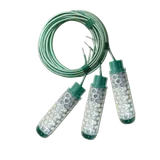
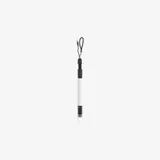
- Irrometer Watermark Buried electrical-resistance sensor measuring soil tension (0–200 cbar): the effort the root makes to pull water, independent of soil type. Cheap and maintenance-free; one adapter connects 3 sensors plus a soil thermometer.
- METER TEROS 11 The TEROS 12's little brother: same prongs, same accuracy for volumetric water content and temperature, but no salinity reading. If your irrigation water isn't saline, it's the cheapest way to put several measuring points in one field.
- METER TEROS 54 A full soil profile on a single cable: four TEROS sensors at 15, 30, 45 and 60 cm, pre-mounted and calibrated. It goes in with an auger and a slide hammer in one session — no pit to dig — and you see at a glance how deep each irrigation reached.
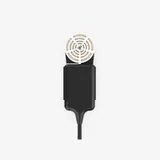
- METER SOLYX 14 METER's new generation. Its CDX technology measures water content, salinity and temperature without texture or salt skewing the reading, so it works where classic capacitance sensors struggle: clay soils, growing media and saline water.
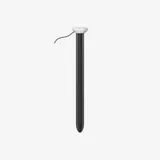
- METER TEROS 21 Measures soil matric potential (tension) like a tensiometer, but solid-state: no refilling, no cavitation and a range down to -100,000 kPa. It tells you directly whether the plant can extract water or not.
- METER TEROS 22 Full-range water potential designed to be installed (and removed) through an auger hole, with no trench and no side-wall contact. The convenient choice when you want soil tension in an already established crop.
- METER TEROS 32 A precision tensiometer that measures soil tension directly in the wet range — exactly where irrigation decisions are made in orchards and vineyards. More accurate than solid-state sensors near field capacity, at the cost of topping up its water.
We offer you
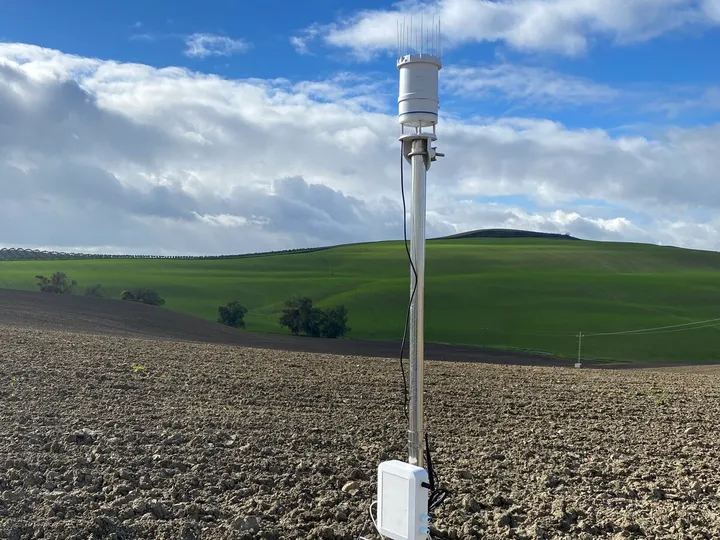
Weather station
- Rain, temperature, humidity, wind and solar radiation
- Automatic evapotranspiration (ET0) for your farm
- Frost and chill-hour alerts
- Connected to Finquet, no cables or computer in the field
Sensors we connect
Already have one? We integrate it. Don't? We supply it.
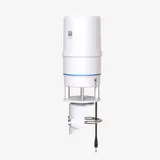
- METER ATMOS 41 Complete weather station in one unit: rain, wind (ultrasonic, no moving parts), temperature, humidity, pressure, solar radiation and lightning. Maintenance-free; this is where your farm's daily evapotranspiration (ET0) comes from.
- METER ATMOS 14 Air temperature, relative humidity and barometric pressure in a single SDI-12 probe, housed in its own radiation shield. It is the trio behind vapour pressure deficit (VPD) and ET0, and it shares the bus with the soil probes, so it costs you no extra datalogger inputs.
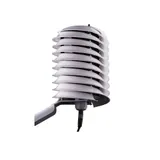
- Barani MeteoTemp + MeteoShield Temperature, humidity, dew point and pressure with a MeteoShield helical radiation shield. The shield is what makes the difference: dirt, snow and ice stay on it rather than on the sensor, so it won't inflate your summer readings the way a clogged multi-plate shield does. ±0.2 °C, 820 µA draw and three-stage lightning protection. Modbus RTU output, made in Europe.
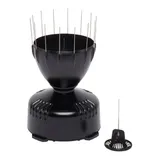
- Davis 6463M AeroCone Tipping-bucket rain gauge with the AeroCone funnel, 0.2 mm per tip. It's the same gauge fitted to the Vantage Pro2, but wired to our datalogger instead of the Davis console: dry-contact output straight into a pulse input, with up to 270 m of cable back to the node.
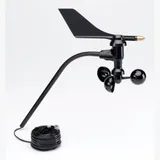
- Davis 6410 Cup anemometer with wind vane. Speed comes out as a dry contact (one turn, one pulse) and direction from a potentiometer, so it takes one pulse input and one analog input on the datalogger. Gives you average wind speed and direction, so you know when you can spray without drift.
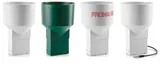
- Pronamic Rain-O-Matic Professional tipping-bucket rain gauge (±2 %) with selectable resolution from 0.1 to 0.5 mm per tip. Logs how much and at what time it rained on your exact plot so you can subtract it from irrigation.
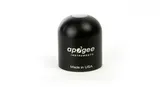
- Apogee SP-421 Silicon-cell pyranometer (ISO 9060 class C) measuring solar radiation in W/m². The key input to work out how much water your crop evaporates each day (ET0) and adjust the irrigation dose.
- METER PHYTOS 31 Leaf-shaped sensor that detects when water or dew sits on it and for how many hours. Combined with temperature it gives the fungal infection risk (peacock spot, downy or powdery mildew) so you spray only when needed.
- METER ATMOS 22 Ultrasonic anemometer: wind speed, gusts and direction with no cups or vane, so nothing seizes up or wears out. It outputs over SDI-12 and tells you when you can spray without drift.
- METER ECRN-100 METER's high-resolution tipping-bucket rain gauge (0.2 mm per tip). Besides rainfall, put one inside the field and it measures how much water a sprinkler or pivot is actually applying.
- METER ATMOS 51 Measures your farm's actual evapotranspiration (ETa), not the estimate. Instead of working out ET0 and multiplying by a crop coefficient, it uses the Bowen variance ratio method (high-frequency temperature and humidity plus solar radiation) to tell you how much water your grove is really losing today, at its current canopy and water status. It outputs SDI-12, so it connects to the same datalogger as everything else. High-end kit, quoted on request.
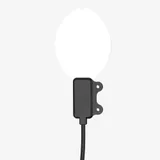
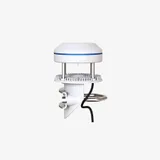
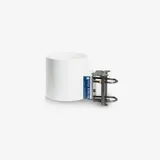
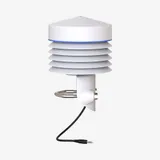
Compatible weather stations, no datalogger
-
 Ecowitt Direct connection
 -
 Netatmo Direct connection
 -
 Davis Via Weather Underground
 -
 Weather Underground Via Weather Underground
And any other station that uploads its data to Weather Underground (Bresser, Froggit, Sainlogic and others): connect it from the app with your station ID and API key.
We offer you
Irrigation kit
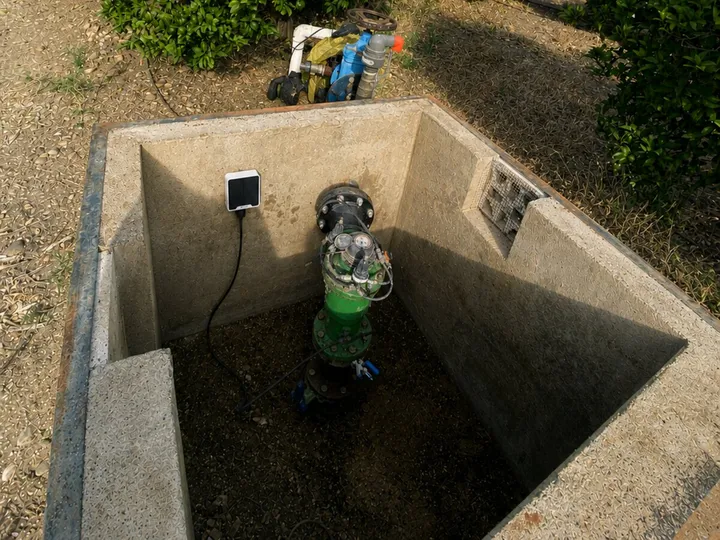
- A datalogger with flow meter and pressure sensor
- Confirms every sector irrigated what it should
- Detects leaks, breaks and dirty filters from the pressure
- Applied water logged automatically in your records
Sensors we connect
Already have one? We integrate it. Don't? We supply it.
- Sensus WP-Dynamic / Arad Woltman turbine meter for DN50 to DN300 pipes with pulse output. Logs the exact volume entering each sector and confirms the scheduled irrigation actually happened.
- Contador DN15–DN40 Multi-jet meter with pulse output for 1/2" to 1 1/2" pipes. Measures water applied in small drip sectors or greenhouses.
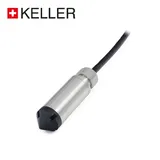
- Keller 21Y / Huba 511 Piezoresistive pressure transmitter (0–16 or 0–25 bar, 4-20 mA) threaded into the pipe. A drop warns of a leak or break; a rise, of a dirty filter. With one before and one after the filter you know when to clean it.
- METER PS-2 METER's pressure transducer built for irrigation: it threads into the pipe and outputs over SDI-12, sharing the cable with the node's other sensors. It confirms a block is pressurised and flags leaks and clogged filters.
- METER ES-2 Measures electrical conductivity and temperature of irrigation water inside the pipe, the reservoir or the well. You know what salinity you're putting on the field and spot a well starting to turn saline.
- Presostato 0,5–1,5 bar Mechanical switch that closes a contact when pressure exceeds 0.5, 1 or 1.5 bar. It doesn't measure, it only says whether there is pressure: the cheapest way to confirm a sector started and at what time.
We offer you
Custom
- Sap flow and dendrometers to see tree stress
- Well and tank levels by ultrasound
- Temperature and humidity in storage or greenhouse
- If the sensor exists, we connect it to Finquet
Sensors we connect
Already have one? We integrate it. Don't? We supply it.
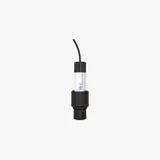
- Keller 26Y / OTT PLS Submersible piezometric probe (ranges 0–10 to 0–200 m) measuring the water column above it. You see the well level, how much it drops while pumping and how it recovers; you can stop the pump before it runs dry.
- Nivel por ultrasonidos Ultrasonic sensor (0.25–10 m) mounted on the lid that measures the distance to the water surface without touching it. Continuous pond and tank level, with an alert when it drops below your minimum reserve.
- METER HYDROS 21 A submersible probe that measures water depth, temperature and electrical conductivity at once. In a well it gives you the level and, along the way, whether the water is turning saline; the transducer is vented, so no separate barometer is needed.
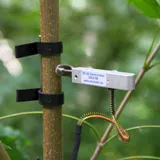
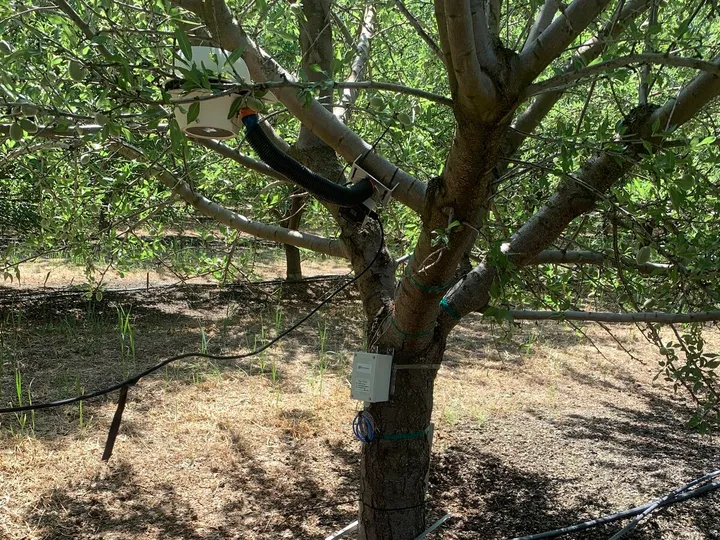
- Ecomatik DD-S / DD-L Contact sensor measuring with micron precision how the trunk (or fruit) shrinks during the day and recovers at night. When daily shrinkage grows, the tree is getting thirsty before the leaves show it.
- Implexx Sap Flow Heat-pulse probe inserted in the trunk that measures sap velocity and converts it into litres per hour used by the tree. Real, not estimated, transpiration to match irrigation to what the tree actually spends.
- FloraPulse Microtensiometer implanted in the trunk that measures stem water potential continuously: the same measurement as the pressure chamber, the reference in vineyards and orchards, but every 15 minutes and without dawn sampling.
- METER IRT An infrared thermometer aimed at the crop that measures canopy temperature without touching it. A well-watered plant cools itself by transpiring: when the canopy runs hotter than the air, it's closing stomata and going thirsty.